Hillcrest Village Garage Door Services
Issue 3 of 3Garage DoorsToronto, Ontario
Garage Door Roller Replacement: inside the visit
Rollers are often changed as part of a wider tune-up rather than on their own.
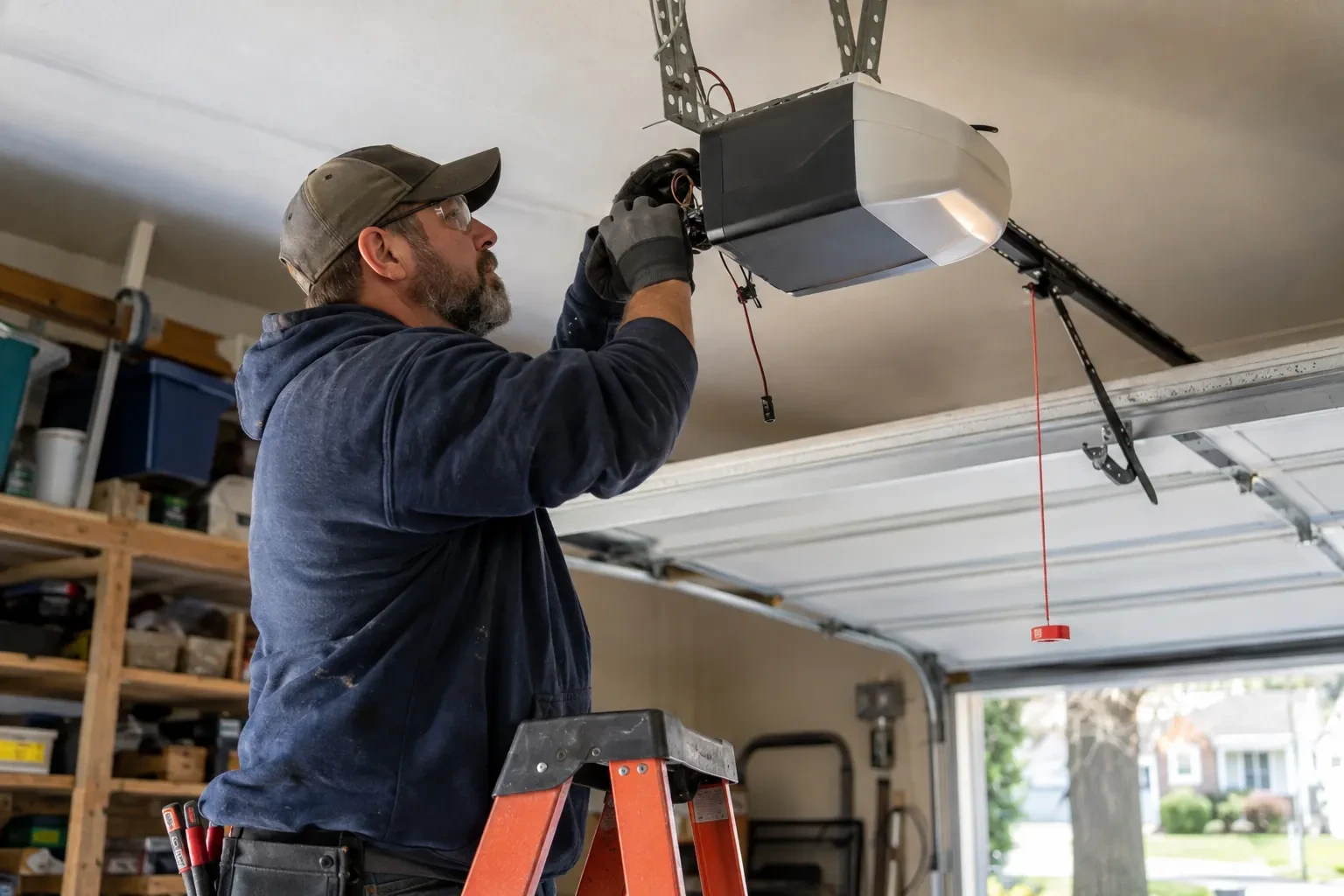
Rollers are often changed as part of a wider tune-up rather than on their own. They wear at about the pace of the hinges, and a door that needed new springs has usually worn its rollers along the way, which is why many technicians suggest a fresh set whenever springs are replaced. Doing them together means the door is secured and the opener disconnected once, the hardware is tightened in a single pass, and everything that touches the track is new at the same time. If your door is already booked for spring, cable or hinge work, ask about the rollers.
Weight and build of the door
A single-skin steel door, an insulated double-skin door and a solid wood door place very different loads on their rollers, and the top rollers on a heavy door carry the most, since they travel furthest along the horizontal track under load. The technician identifies the door's construction and approximate weight, checks whether the end stiles carry single or double hinges, and looks at the rating of the rollers currently fitted. Many heavier doors left the factory on light plastic wheels intended for the lightest door in the range. Matching the new set's load rating and bearing count to the actual door is what makes the replacement last.
The bottom rollers and the cable brackets
The lowest rollers live in the bottom brackets, and those brackets also anchor the lifting cables, which means they carry the counterbalance load whenever the door is closed. This is the one roller position that is never approached casually. Depending on the door, the technician either exchanges the roller while the bracket stays fastened and the cable stays put, or first takes the spring tension off with winding bars so the bracket can be unbolted and inspected. Either way the bracket, the cable end and the fastening into the section are examined, and a corroded or bent bracket is replaced while the door is already secured.
Signs to watch for next time
Rollers wear slowly, so it helps to know the early signals. A rhythmic clicking that travels with the door, like a train over rail joints, points to a bearing beginning to fail. A wheel that leans to one side in its hinge, or a door that starts to rock as it rounds the curve, suggests a stem or wheel wearing oval. Grinding that returns a day or two after lubrication means the wear is in the wheel, not the grease. Catching these while the door still runs makes the next roller change a planned visit rather than a door stuck halfway.