Repairs · Toronto
Garage Door Tune-Up
Every morning the door announces itself to the whole street: a long metallic squeal as it climbs, a rattle at the top, and a groan on the way back down. It still opens and closes, but it never used to sound like this.
Garage Door Tune-Up
In plain words
A noisy garage door is a door asking for a small amount of attention. Squeaks usually come from dry hinge pins and roller bearings. A rattle is often a hinge screw or track bolt that vibration has backed out. A grinding or popping sound can be a roller worn out of round, or a chain slapping the opener rail. A tune-up goes through these one at a time, tightening, lubricating and adjusting, and separates the sounds that maintenance settles from the ones that point to a worn part. The result is a door your neighbours stop noticing, and a clear list if something needs replacing.
How the visit goesYou pulled the red cord to lift the door by hand during a power cut and it felt like lifting a car. The opener has been doing all the work and grumbling about it, and you are not sure how long that can go on.
Toronto
How the visit goes
Feeling the balance by hand
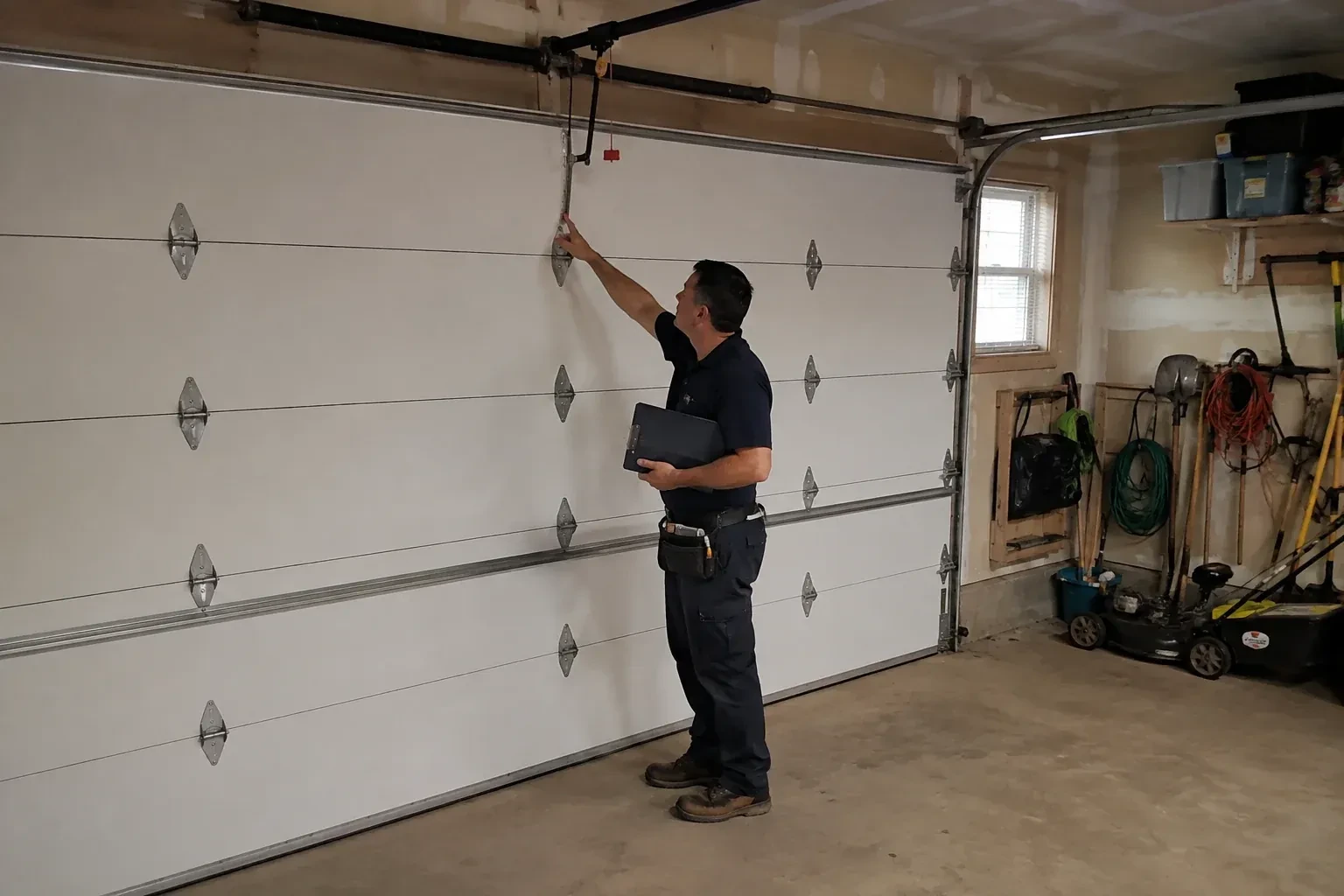
The door is disconnected from the opener with the red release handle, and the technician lifts it by hand, gripping only the handles or a safe edge. A properly balanced door rises with modest effort, stays fully open on its own and holds still when left about a metre off the floor. A door that sinks back down, or that takes real strength to raise, has springs that have lost tension and an opener that has been carrying weight it was not designed for. This check takes a minute and decides more than any other: it tells the technician whether the tune-up can proceed as maintenance or whether spring work needs to be quoted first.
Chain, belt, rail and trolley
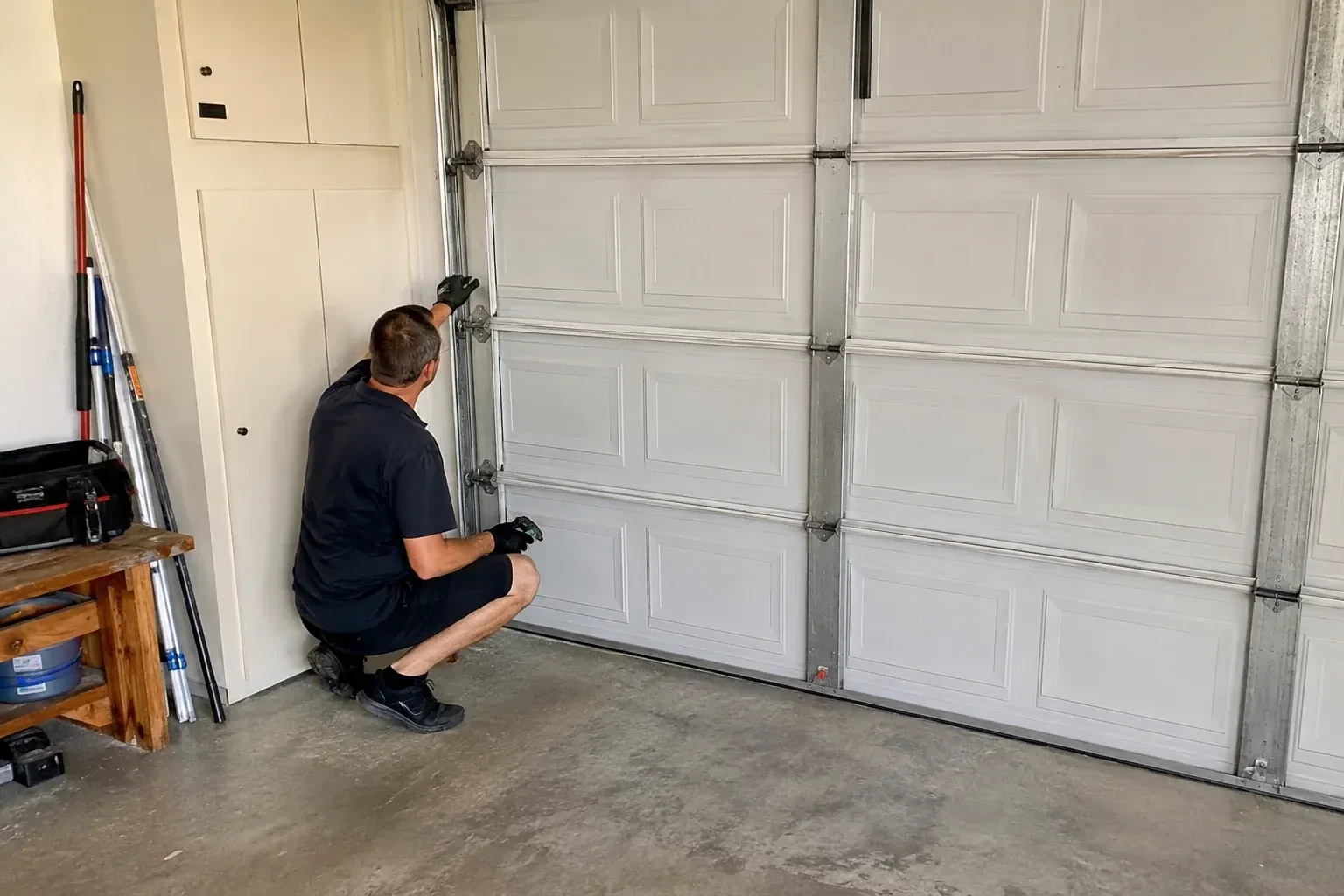
On a chain-drive opener the technician sets the chain so it neither sags onto the rail nor pulls taut, following the maker's measurement at the midpoint, and lubricates the chain and rail only where that maker calls for it. A belt drive is checked for tension, cracking and fraying. The trolley is inspected for wear where it rides the rail, the release lever is worked to confirm it disengages and re-engages cleanly, and the door arm is checked for straightness and secure pins at both ends. Rail hangers are tightened so the whole assembly stops shaking when the door starts and stops. This quiets the ceiling and takes strain off the motor's drive gear.
A door you hear less and trust more
The most noticeable change is the sound. With the hinge pins and roller bearings lubricated and the loose hardware tightened, the squeal and the rattle that woke the household are gone or reduced to a low hum of rollers in a clean track. The door starts without the shudder and lands on the floor with a soft contact instead of a slam. Because the technician ran the same cycle before and after the work, you can hear the difference for yourself before they leave, and the sounds that remain, if any, are explained: what they are, which part they come from and whether that part is worth replacing now or watching for a season.
Garage Door Tune-Up
In the van
- Jamb and header weatherstrip
- Hinge screws and track bolts
- Socket set and drivers
- 2x4 test block and tape measure
- Replacement hinges
What affects the quote
Same fees day, night or weekend
1Height and access
A tall door with the opener and springs high on the header, or a garage packed with storage along the tracks, adds ladder work and time compared with a clear standard-height bay.
2Track alignment
Tightening track bolts is included. A track that has been pulled out of line or dented by a vehicle needs straightening or a section replaced, and that is quoted as its own repair.
3Photo-eye and wiring work
Cleaning and realigning sensors is routine. A bent bracket, a chafed wire or a sensor that has failed means a part or a rewire, which is named separately.
Garage Door Tune-Up: questions
Does road salt harm the door?
Salt carried in on tires and shovelled snow settles on the lowest hardware: the bottom brackets, the lower track, the bottom roller stems and fixture bolts. Those are the parts that carry the door's weight, so corrosion there matters. Rinsing the lower hardware and the inside face of the bottom section after winter, keeping the floor by the tracks swept, and having the bottom brackets looked at each spring keeps salt from becoming a structural problem.
Can you replace my rollers with quieter ones during the tune-up?
Often, yes, if you decide you want them and stock is on the truck. Nylon rollers with sealed bearings run noticeably quieter than plain steel rollers and need no lubricant. Rollers on the middle sections can be changed with the door clamped in the track; the bottom rollers sit in the bottom brackets, which hold spring tension, and are changed as part of a separate job. The technician can tell you how many are worn and what the change would involve.
Do you adjust the springs during a tune-up?
Springs are inspected and lubricated during a tune-up, and the balance test tells us whether they are carrying the door's weight properly. Changing their tension is a separate, deliberate job: the door is clamped to the track, winding bars are used on a torsion spring, and the technician works from a stable position. If the balance check shows the springs need adjustment or replacement, you receive that as its own recommendation with its own quote.
Repair & Maintenance
- Off-Track Garage Door ResetYour car is inside and the door is stuck crooked across the opening.
- Garage Door Panel ReplacementAfter an overnight freeze the door stuck to the slab, the opener strained, and something gave.
- Garage Door Bottom Seal ReplacementThere are mouse droppings along the wall behind the recycling bins, and at one bottom corner of the…
Garage Door Tune-Up near you
Shops, warehouses and service bays in Toronto have their own list: rolling steel doors, heavy sectional doors, industrial operators, safety edges and high-cycle springs. Alongside our residential work, we service and replace all of these and can set up a maintenance schedule that fits your operating hours.