New Doors · Toronto
Commercial Sectional Door Repair
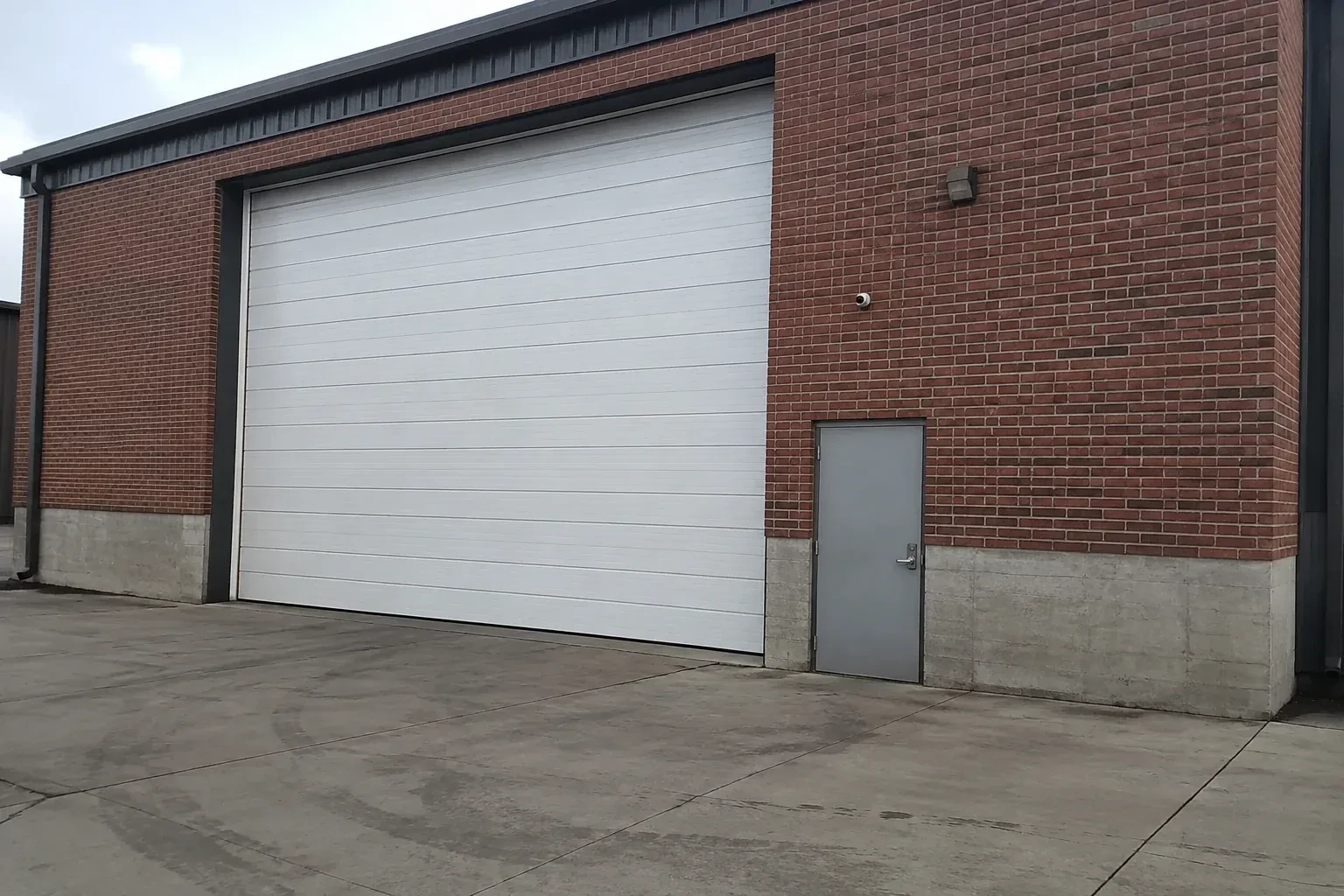
Cold weather has exposed a widening gap below the closed door. The bottom retainer is bent, the rubber seal is split, and uneven seating lets drafts and slush enter the work area.
Commercial Sectional Door Repair
In plain words
When a bay door hangs crooked, the visible angle is often only the starting clue. A technician compares cable tension on both sides, checks how each cable sits on its drum, examines bottom fixtures and looks for a shifted track or damaged roller. The door is supported before tensioned parts are handled. Once the cause is corrected, the cables are seated, the door is levelled and balance is checked through travel. Powered limits and protective devices are tested afterwards, because the operator depends on a mechanically sound door.
How the visit goesA high-lift door begins smoothly, then a cable loses tension as the top sections change direction. The loose cable no longer follows its drum grooves evenly, leaving the door unreliable at the top of travel.
Toronto
How the visit goes
Reviewing high-lift geometry
High-lift and vertical-lift systems are identified before components are ordered. The technician records door dimensions, track rise, drum arrangement, shaft location, cable path, spring information and operator connection. Back hangs, sway braces, track splices and end stops are examined because movement overhead can appear as cable trouble below. Cable tension is observed at key transitions, especially near the open position. The resulting measurements guide part selection and show whether the fault came from wear, lost support, changed adjustment or a mismatch within the lift arrangement.
Correcting operator travel
Operator work follows the mechanical repair. The drive chain, sprockets, shaft connection, manual hoist, brake or clutch are inspected and adjusted according to the installed unit's instructions. Open and closed limits are set to the actual door positions without driving sections against stops or compressing seals excessively. Control wiring and stop functions are checked, followed by the photoelectric sensors or sensing edge supplied with the system. Several commanded cycles confirm consistent stopping, reversing and seating from the controls normally used by the facility.
Level movement through the opening
After cable, spring or track work, the door should rise with its bottom edge level and move without a side lag. Facility staff can watch the first few routine cycles from a clear position and note whether both cables remain neatly seated on their drums. A new tilt, rubbing sound or loose strand is useful information to report before the opening sees heavier traffic. Keeping pallets and vehicles outside the marked travel zone also protects the restored alignment and gives operators a clear view of the complete door path.
Commercial Sectional Door Repair
In the van
- Commercial door sections
- Bottom fixtures
- Numbered end hinges
- Vertical and horizontal track
- Shafts and bearings
What affects the quote
Same fees day, night or weekend
1Lift and track configuration
Standard, low-headroom, high-lift and vertical-lift arrangements use different track geometry, drums, cables and access methods, so the installed configuration shapes labour and parts.
2Door size and moving weight
Opening dimensions, panel construction, reinforcement and overall door weight determine component ratings, handling methods and how much support is required during the repair.
3Number of affected openings
A single bay with one defined fault differs from a facility request covering several numbered doors, separate symptoms and individual operational tests.
Commercial Sectional Door Repair: questions
Will a panel repair also address the operator?
The operator is reviewed when panel damage changes door movement, balance or closed position. After the mechanical repair, the drive connection, limits and protective devices can be checked against the restored travel. This is especially useful after impact, because a bent section may have made the operator stop early or apply force against resistance before the damaged panel was replaced.
How does high-lift track change the repair?
High-lift doors keep travelling vertically above the opening before turning into horizontal track. That geometry changes cable length, drum type, track support and operator arrangement. Repairs therefore use the recorded lift dimensions and door weight, with cable tension observed through the transition and near the open position. Components from a standard-lift setup are not assumed to match.
Should the operator be adjusted when the door feels heavy?
The mechanical door should be assessed before operator force, clutch or travel settings are changed. Extra resistance can come from spring imbalance, cable trouble, worn rollers, track contact or an engaged lock. Once the door moves freely and is correctly balanced, the operator can be set to that sound baseline and its limits and protective devices can be checked.
Installation & Upgrades
- Insulated Steel Garage Door InstallationYou want windows for natural light without turning the garage into a cold glass wall.
- Wind-Rated Garage Door ReplacementYou are combining two narrow garage bays into one broad opening.
- Carriage-House Garage Door InstallationTraditional swing-out coach doors have the look you like, but the driveway needs to remain clear as…
Commercial Sectional Door Repair near you
Shops, warehouses and service bays in Toronto have their own list: rolling steel doors, heavy sectional doors, industrial operators, safety edges and high-cycle springs. Alongside our residential work, we service and replace all of these and can set up a maintenance schedule that fits your operating hours.