New Doors · Toronto
Wind-Rated Garage Door Replacement in Toronto
You are combining two narrow garage bays into one broad opening. The new door spans much farther than either old door, bringing section reinforcement, track strength, jamb attachment, and design pressure into the planning conversation.
Wind-Rated Garage Door Replacement
In plain words
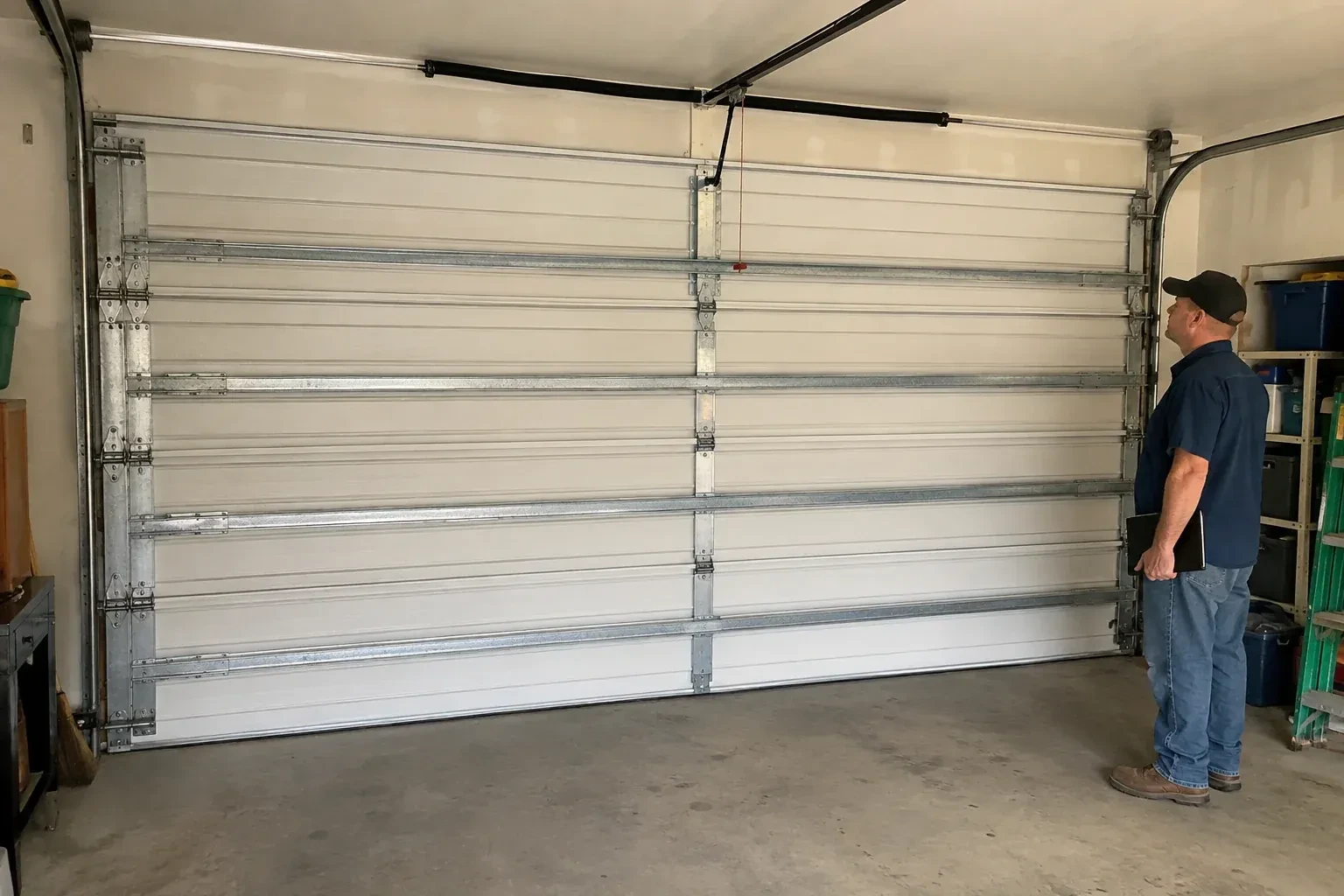
This upgrade is useful when an older door lacks readable documentation and noticeable flex has raised questions about the opening. The service establishes what the project actually needs, inspects the structural mounting surfaces, and selects a replacement with traceable construction and attachment details. During installation, technicians manage the high-tension counterbalance system, secure every reinforcement member, and verify the load path at both jambs. Final checks cover balance, smooth roller travel, full closure, manual release, sensors, and reversal response.
How the visit goesNew windows would improve the door's appearance, but they also change the section layout and reinforcement pattern. You need a wind-rated configuration designed with the chosen glazing instead of treating the windows as a later addition.
Toronto
How the visit goes
Understand the wind criteria
Project documents are reviewed for the design pressure or other direction supplied by the building designer or municipal process. Building height, local reference wind pressure, exposure, opening dimensions, distance from wall edges, and internal pressure assumptions may all matter. The purpose is to connect the replacement to a defined requirement rather than attach a broad wind description to any reinforced door. If the necessary criterion has not been established, the owner learns which project professional or authority should provide it before selection moves ahead.
Integrate windows and perimeter seals
Where the selected door includes glazing, factory-prepared sections and retainers are assembled according to that configuration. The technician checks that inserts, frames, and seals sit evenly without interfering with nearby struts or hinges. A bottom retainer and seal follow the floor contour, while side and top weatherstrip meet the face of the closed door with consistent contact. Careful sealing supports comfort and moisture control, and the planned section layout keeps the window choice aligned with the reinforcement design.
Simple seasonal observation
A few visual checks help preserve the installed configuration. From inside the closed garage, look for loose strut or hinge fasteners, rollers moving out of line, daylight at the seals, corrosion, or changes in the jamb material. Clear leaves and grit from the floor near the tracks, and keep stored items away from moving parts. After freeze-thaw weather, note whether the bottom seal remains seated evenly. Any developing bow, rub, or unusual noise provides a clear reason to arrange a closer inspection.
Wind-Rated Garage Door Replacement
In the van
- Jamb and flag brackets
- Reinforced end hinges
- Operator reinforcement bracket
- Horizontal reinforcing struts
- Lift cables and drums
What affects the quote
Same fees day, night or weekend
1Required design pressure
The project's inward and outward pressure criteria shape which complete door assemblies are suitable, including their reinforcement, tracks, hardware, and attachment details.
2Window configuration
Glazing size, placement, pane type, frames, and retainers affect section layout, finished weight, reinforcement selection, privacy, daylight, and exterior appearance.
3Documentation requirements
Permit coordination, design information, installation records, labels, component schedules, photographs, and closeout details can add project administration to the physical work.
Wind-Rated Garage Door Replacement: questions
How is the required wind pressure determined?
The value comes from the applicable building-code process and project information, often with input from a designer or municipal building official. Reference wind pressure, exposure, building height, opening size, wall location, importance category, and internal pressure can contribute. A street address or a general weather description alone is not a complete design basis.
Why are both positive and negative pressures important?
Wind can push a closed door toward the garage or create suction that draws it outward. Those actions load sections and hardware differently, including rollers, hinges, tracks, and attachments at the jambs. A suitable configuration addresses both directions using the pressure values and details established for the project rather than treating reinforcement as resistance in only one direction.
What happens to the old garage door?
The operator is disconnected, spring energy is released with controlled tools, and sections are removed in sequence. Tracks, cables, drums, springs, and brackets follow once their loads are managed. Disposal or recycling is handled according to the agreed scope. Clearing the old assembly also exposes jamb areas that deserve a final condition check before new anchors are placed.
Installation & Upgrades
- Insulated Steel Garage Door InstallationYou want windows for natural light without turning the garage into a cold glass wall.
- Carriage-House Garage Door InstallationTraditional swing-out coach doors have the look you like, but the driveway needs to remain clear as…
- Full-View Glass Garage Door InstallationThe garage works as a studio during the day, yet the closed solid door leaves it dependent on…
Wind-Rated Garage Door Replacement near you
Shops, warehouses and service bays in Toronto have their own list: rolling steel doors, heavy sectional doors, industrial operators, safety edges and high-cycle springs. Alongside our residential work, we service and replace all of these and can set up a maintenance schedule that fits your operating hours.